
News & Milestones
Since our earliest projects, Nucleolus Software has built serious-game technologies that turn complex health, science, and behaviour-change challenges into engaging, measurable digital experiences. Our current healthcare work builds on this foundation: combining child-centred game design, AI and machine learning expertise, clinical collaboration, and behavioural insight to support families through long-term therapies. Our work has received support from organisations including Innovate UK, the UK Games Fund, the Economic and Social Research Council (ESRC), the Gift of Sight charity, and the Solent Growth Enterprise Partnership. It has led to prototypes and apps across healthcare conditions like amblyopia and nystagmus, games that support positive behaviour changes, public engagement projects, clinical collaborations, and impactful publications.
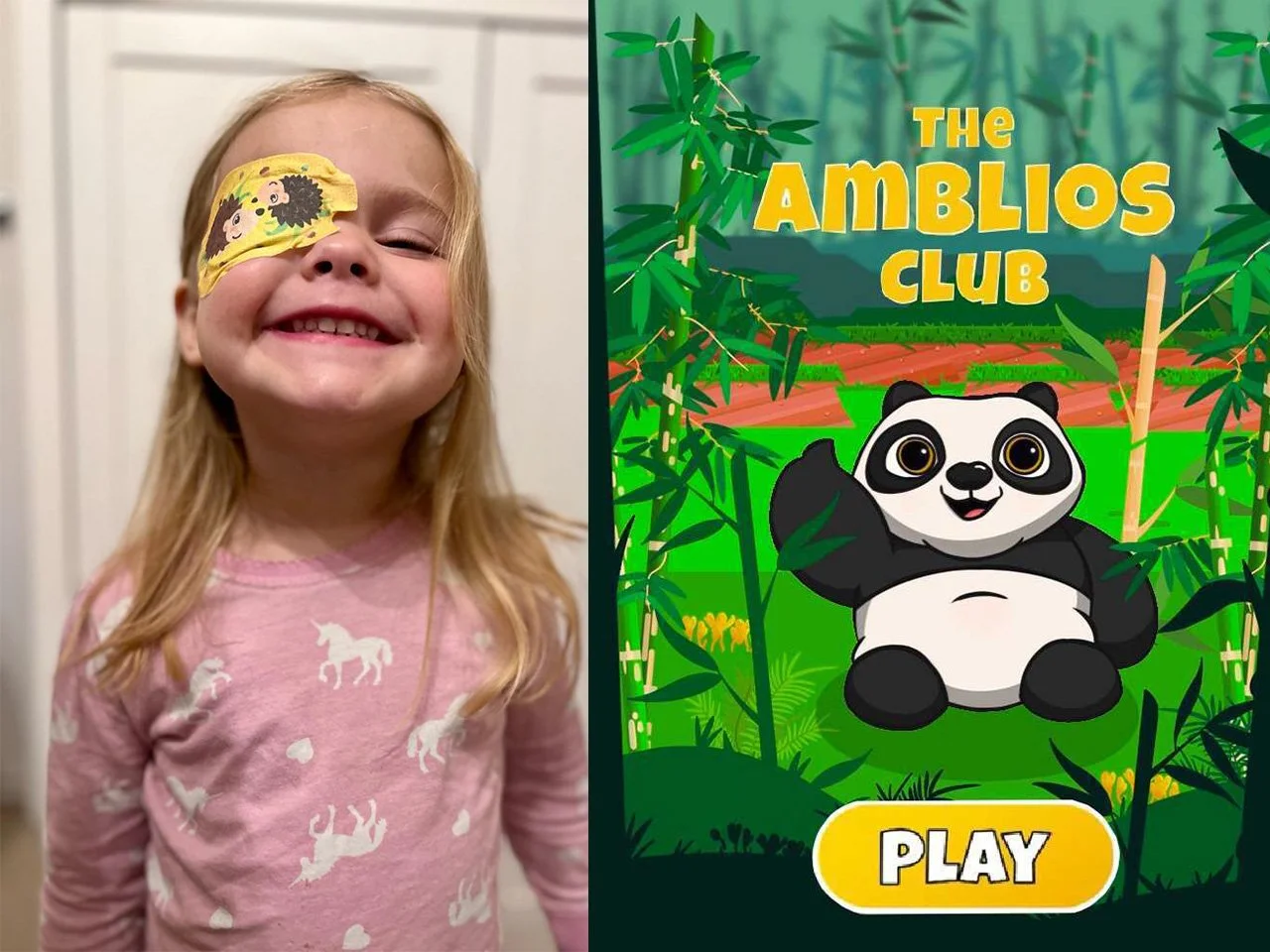
Amblios Club: child-friendly support for amblyopia patching therapy.
Highlights


July 2026: Venny wins the prestigious Game Dev Heroes awards in Design
Link: Linkedin
March 2026: The British and Irish Orthoptic Society endorse our amblyopia and patching therapy infographics
Link: BIOS web site
December 2025: IEEE publishes our paper on game-based measurement of nystagmus severity
Links: Paper record; Nystagmus games
November 2025: Nucleolus presents its suite of nystagmus games at the British Nystagmus Network Symposium
Link: Nystagmus games
September 2025: The BBC features our work on games for nystagmus assessment
Links: BBC feature; Nystagmus games
August 2025: Nucleolus presents its nystagmus games at the renowned IEEE SeGAH international conference
Link: Nystagmus games
July 2025: Nucleolus wins the Technology Advancement Award at the Central South Business Awards, adding external business recognition to our technology and product-development track record.
Link: Business South Awards
July 2025: Nucleolus receives a UK Games Fund Award to prototype the game Hex
Link: UK Games Fund
April 2025: Our research on real-world views of amblyopia patching is published in an academic journal
Link: Patching therapy survey paper
May 2024: Amblio launches on iOS and Android, extending Amblios Club into a parent-facing support app for amblyopia patching therapy
Links: App Store, Google Play Store
May 2023: Amblios Club launches on iOS and Android, making our amblyopia support games publicly available to families through the App Store and Google Play
Links: App Store, Google Play Store, BBC feature, Independent feature, Yahoo feature
October 2022: Nucleolus wins Innovate UK Fast Track support for The Amblios Club
Link: The Amblios Club
October 2021: Nucleolus joins the SETsquared ICURe commercialisation programme
Link: SETsquared
2020-2021: Early funded prototypes establish the company’s foundation in serious games, game theory, and public engagement
Nucleolus: a year-by-year view of our progress
2026: Clinical credibility and prototype completion
In 2026 we strengthened the healthcare aspects of our work while continuing to demonstrate delivery across games, learning, and serious applications. Our amblyopia and patching therapy infographics were endorsed by the British and Irish Orthoptic Society and made available through the BIOS website, providing an important external signal for our child-health work. The team also completed its UK Games Fund prototype for Hex, while continuing to contribute to conferences, lectures, and research in game design, resilience, and applied game theory.
2025: Health-games validation, public visibility, research, and knowledge exchange
In 2025, our healthcare-focused work became significantly more visible. We expanded our amblyopia product line, advanced our health-games work through nystagmus research and public-facing activity, and received external business recognition by winning the Technology Advancement Award at the Central South Business Awards. James was also appointed Super Champion of the UK’s Knowledge Exchange Hub for Mathematical Sciences, strengthening the team’s role in connecting academic expertise with enterprise and real-world application. The year also included national visibility, healthcare conference presentations, peer-reviewed outputs, and a UK Games Fund award for Hex. Together, these milestones show a team capable of combining public engagement, clinical-adjacent collaboration, technology-led execution, research dissemination, and funded product development.
2024: Amblyopia product expansion, funded prototype delivery, and external recognition
In 2024, Nucleolus expanded its child-health portfolio with the launch of Amblio, a parent-facing companion app to Amblios Club that supports families managing amblyopia patching therapy at home. Alongside this product milestone, the team began developing a suite of nystagmus games through support from the Gift of Sight charity. The year also strengthened the company’s serious-games profile through programme leadership at GALA 2024, invited talks, research publications, and Venezia Georgieva’s nomination to the MCV/DEVELOP “30 Under 30” list.
2023: Amblios Club launch, public visibility, and interdisciplinary depth
In 2023, we moved our child-health work into public distribution with the launch of Amblios Club on the Apple App Store and Google Play. Designed to support children with amblyopia during patching therapy, the app demonstrated how the team’s games, behavioural-design, and technical expertise could be applied to a real family-health challenge. The project received national media coverage from the BBC, The Independent, and Yahoo, highlighting the collaboration between clinicians, mathematicians, and game designers behind the work. James was also appointed Senior Knowledge Exchange and Enterprise Fellow at the University of Southampton, reflecting his role in bridging academic expertise and industry application, particularly in areas such as machine learning and AI. Alongside this, the company showcased the Lemonade board game at GALA 2023, while team members contributed to research, workshops, and invited talks across cooperative game theory, defence-related game-theoretic modelling, gamification, machine learning, and related fields.
2022: Amblios Club, Innovate UK support, and serious-games
In 2022, Nucleolus advanced its early health-games work through The Amblios Club, a suite of games designed to encourage children with amblyopia to adhere to patching therapy. The company received £50k from Innovate UK’s Fast Track competition to continue developing the product, launched dedicated web and social channels for the product, and published a white paper on engagement, gamification, expectation management, and feedback. Team members also remained active in the serious-games and games-industry communities through GALA, Pocket Gamer Connects, academic publishing, and public panel activity.
2021: Commercialisation, public engagement, and serious-games foundations
In 2021, we continued to build momentum around commercialisation and public engagement. The company joined the SETsquared ICURe programme, received funding from the University of Southampton to develop the Mayor Mayhem game for democratic simulation, and showcased work at the Festival of Social Sciences and the GALA conference on games and learning. The year also saw continued academic output in digital play, cooperative games, Stackelberg games, and serious games, alongside growing team visibility through roles with the Serious Games Society, Women in Games, and Pocket Gamer Connects.
2020: Funded development and game-theory foundations
In 2020, Nucleolus continued to build the technical and funding foundations for its serious-games portfolio. The company received follow-on support from Solent LEP, secured an ESRC Impact Acceleration Award to develop an educational game, and contributed research in cooperative game theory that informed several prototypes. Márton’s recognition for his PhD research and the publication of work on the nucleolus of cooperative games reinforced the mathematical and algorithmic depth behind the company’s early concepts.
2019: Company foundations in serious games and applied game theory
In 2019, Nucleolus’s early activity centred on the intersection of serious games, cooperative game theory, and public-interest applications. The team received Solent LEP funding to develop the first prototype of the educational game Avian, while team members presented research at international game-theory events and built visibility in the games sector. These early milestones established the company’s foundation: using rigorous game-theoretic thinking and engaging digital experiences to address complex behavioural and social problems.
Healthcare and therapy-support work
Our healthcare work focuses on using games, AI, and child-centred design to make long-term therapies for children more measurable, engaging, and sustainable for families.

Amblios Club gameplay: making patching therapy feel more engaging for children.
March 2026: The British and Irish Orthoptic Society endorses our amblyopia and patching therapy infographics
Our infographics on amblyopia, also known as lazy eye, and patching therapy were officially endorsed by the British and Irish Orthoptic Society and made available through the BIOS website.
Link: BIOS web site
December 2025: IEEE publishes our paper on games for estimating nystagmus severity
Our paper, "A Suite of Games to Estimate the Severity of Nystagmus", was published by IEEE. The work explores how game-based interaction may support the assessment of nystagmus, a condition that causes rapid, involuntary eye movements.
Links: Paper record; Nystagmus games
November 2025: Nucleolus presents nystagmus games at the British Nystagmus Network Symposium
Joerg presented our suite of nystagmus games at the 2025 Nystagmus Symposium organised by the British Nystagmus Network, sharing progress with a specialist audience connected to the condition.
Link: Nystagmus games, British Nystagmus Network
September 2025: BBC features our work on nystagmus games
Our work on nystagmus games was featured by the BBC. The project explores how games may help eye specialists better measure the severity of nystagmus, a condition involving rapid, uncontrollable eye movements.

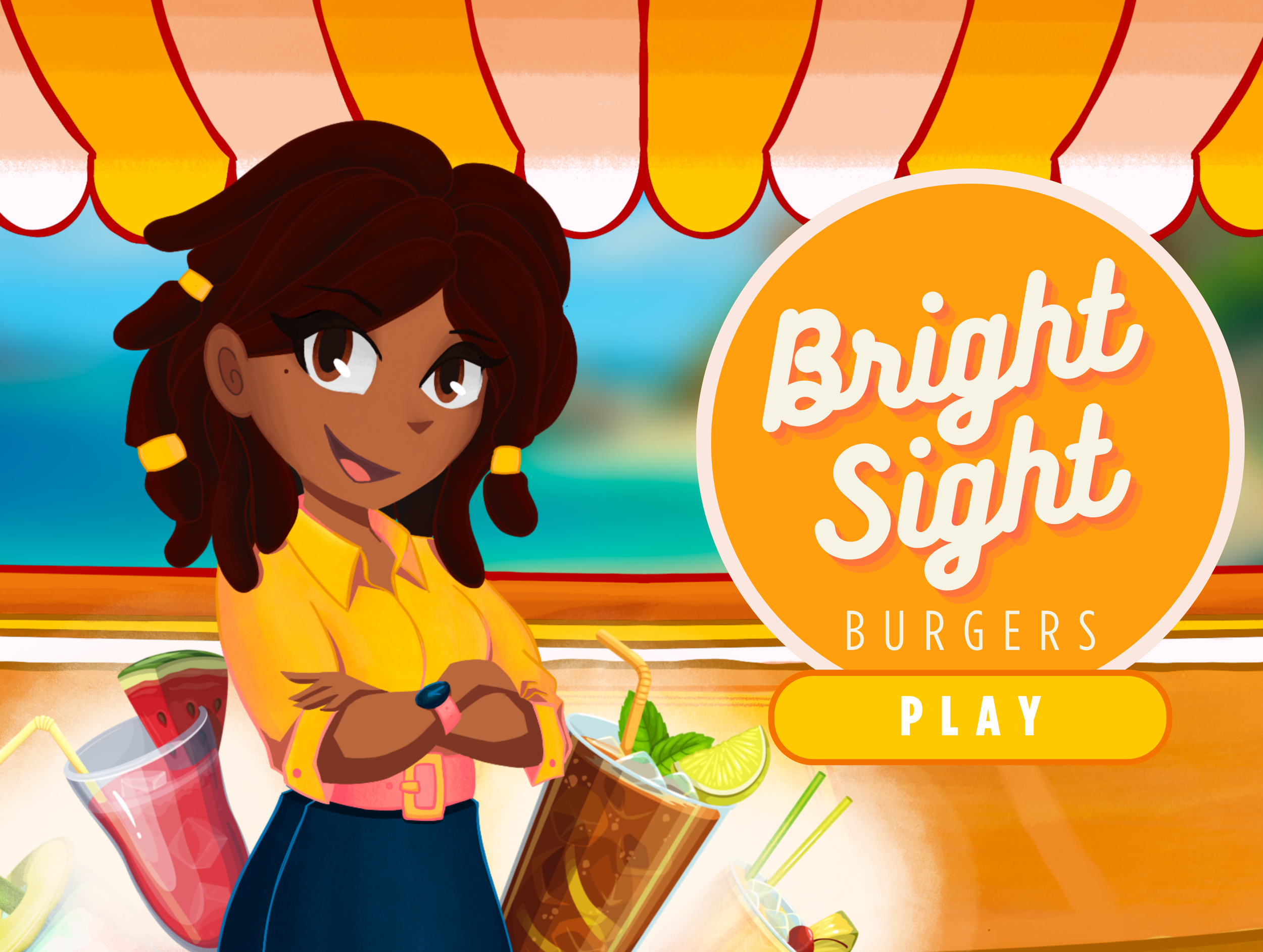
Bright Sight Burgers: game-based visual tasks developed for nystagmus research.
Links: BBC feature; Nystagmus games
August 2025: Nucleolus presents nystagmus games at IEEE SeGAH
Joerg gave a talk on our suite of nystagmus games at IEEE SeGAH, the highly regarded international conference on Serious Games and Applications for Health.
Link: Nystagmus games
May 2025: Nucleolus presents nystagmus games at Gift of Sight’s Beating Blindness Lecture
Joerg presented our suite of nystagmus games at the Beating Blindness Lecture organised by the Gift of Sight charity.
Links: Nystagmus games; Gift of Sight charity
April 2025: Patching therapy survey paper is published
The paper "Real-World Views of Patching Differ to Health Professionals’: An Online Survey of Professionals, Patients, Teachers, Parents and Carers" was published, adding to the evidence base around amblyopia (lazy eye) patching and the lived experience of families and professionals.
Link: Patching therapy survey paper
March 2025: The University of Southampton features our nystagmus work
The University of Southampton featured our work on nystagmus games in a video, highlighting the collaboration and its potential healthcare relevance.
Link: Nystagmus games; University of Southampton video
November 2024: The Gift of Sight charity supports development of our nystagmus game suite
With support from the Gift of Sight charity, Nucleolus began developing a suite of games designed to support work on nystagmus assessment.
Links: Nystagmus games; Gift of Sight charity
May 2024: Amblio launches as a companion app for parents and carers
We launched Amblio, a companion app to Amblios Club, on the Apple App Store and Google Play. While Amblios Club focuses on child-friendly games that support amblyopia patching, Amblio is designed for parents and carers, with tools for tracking eyepatch use, viewing progress charts, setting patching reminders, accessing practical guidance, and rewarding children for completing patch time. Together, the two apps form a complete support system for families managing amblyopia treatment at home.
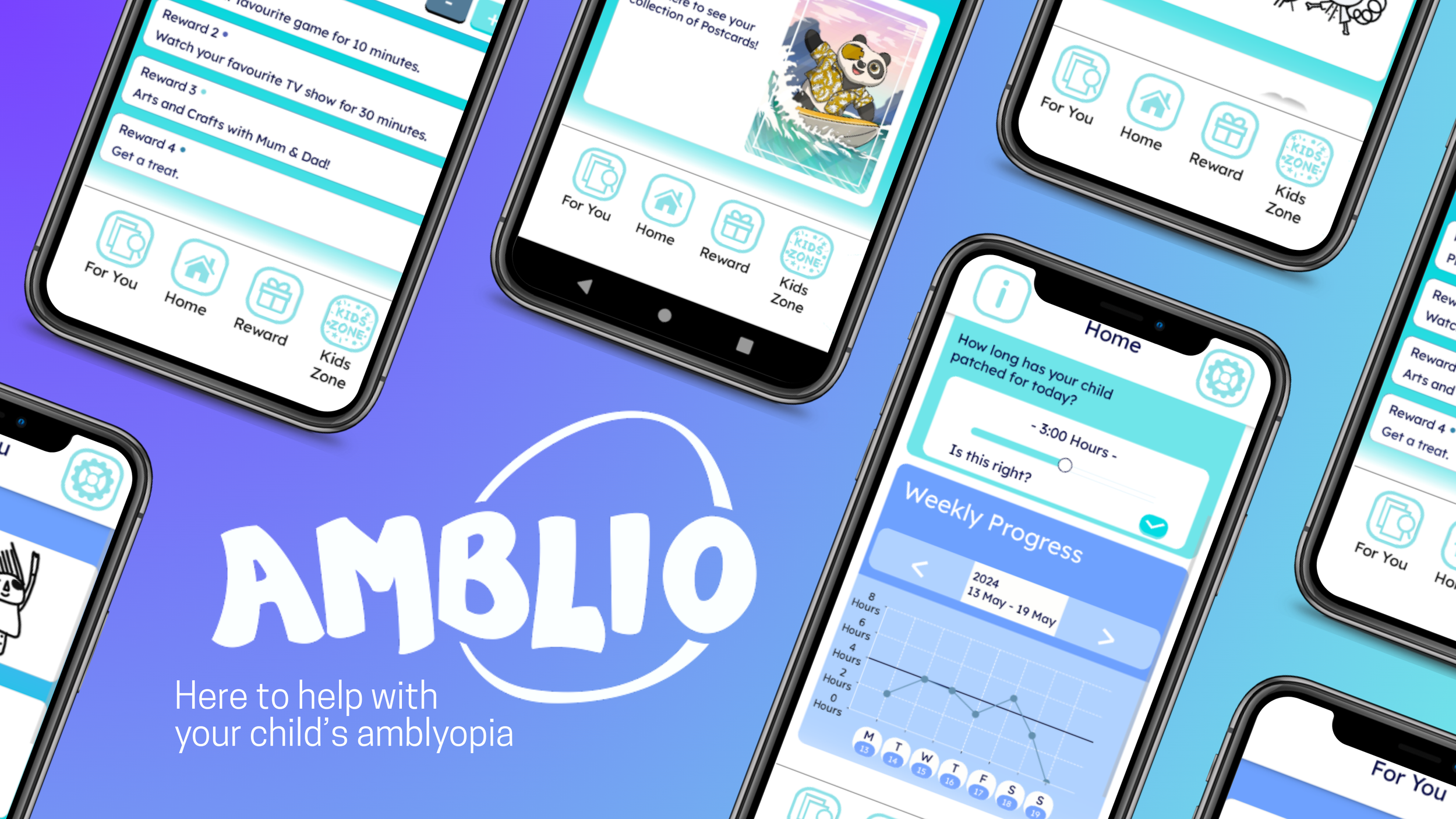
Amblio screenshot showing patching progress and eyepatch-use statistics.
Links: App Store, Google Play Store
May 2023: Amblios Club launches on iOS and Android and receives national media coverage
We launched Amblios Club, our game-based support app for children with amblyopia, on both the Apple App Store and Google Play. The launch made our amblyopia support games publicly available to families and was covered by the BBC, The Independent, and Yahoo, highlighting the collaboration between clinicians, mathematicians, and game designers behind the project.
Links: App Store, Google Play Store, BBC feature, Independent feature, Yahoo feature
October 2022: Nucleolus receives Innovate UK Fast Track funding for The Amblios Club
Nucleolus was awarded £50k through the Innovate UK Fast Track competition to continue work on The Amblios Club, a suite of games designed to encourage children with amblyopia (lazy eye) to stay engaged with patching therapy.
September 2022: The Amblios Club launches its website and social channels
The Amblios Club, our project to help children with amblyopia (lazy eye), launched its official website and social media channels, giving parents and supporters a dedicated place to follow the project.
Link: Amblios Club
Funding, product launches, and prototype delivery
Across funded prototypes and original games, we turn complex behavioural, scientific, and educational ideas into playable experiences.
January-February 2026: Nucleolus completes the UK Games Fund prototype for Hex
Nucleolus completed its UK Games Fund-supported prototype for Hex, a narrative-driven role-playing game inspired by Slavic and Celtic folklore.
Links: UK Games Fund Prototype; Hex project page
July 2025: Nucleolus receives UK Games Fund Award for Hex
Nucleolus received a UK Games Fund Award to develop a prototype of Hex, a narrative-driven role-playing game inspired by Slavic and Celtic folklore.

Project Hex concept artwork: a narrative-driven RPG supported by the UK Games Fund.
Links: UK Games Fund profile; Hex project page
January 2025: Brightside Burger Games go live
Brightside Burger Games went live, adding another public-facing game project in the healthcare sector to the Nucleolus portfolio.
Link: Brightside Burger Games
November 2024: Nucleolus completes the Astera prototype
The team completed the Astera prototype, an ongoing project exploring the evolution of galaxies through interactive digital experience design.
Links: Astera
December 2022-July 2023: Nucleolus works on three major stakeholder-led projects
The team worked on three major projects: Plausible Futures, a cooperative/competitive game; Towards a Calculus for the Creation and Utilisation of Resource Sharing Scenarios; and Healthy Ageing Risk Factors, a digital game developed with several stakeholders.
October 2021: Nucleolus joins SETsquared ICURe
Nucleolus joined the Innovation to Commercialisation of University Research programme run by SETsquared, the enterprise partnership of the universities of Bath, Bristol, Cardiff, Exeter, Southampton, and Surrey.
Link: SETsquared
May 2021: Nucleolus receives funding for Mayor Mayhem
Nucleolus received funding from the University of Southampton to develop a prototype of Mayor Mayhem, a democratic simulation game.
Link: Mayor Mayhem
January 2021: Nucleolus receives funding from Wimbledon Football Club for Dons Through the Ages
Nucleolus received funding from Wimbledon Football Club to develop Dons Through the Ages, an augmented reality game presenting the history of the club through the personas of its goalkeepers.
August 2020: Nucleolus receives ESRC Impact Acceleration Award for Avian
Nucleolus received an Impact Acceleration Award from the Economic and Social Research Council to develop a version of Avian for use in educational settings.
March 2020: Nucleolus receives follow-on Solent LEP funding for Avian
Nucleolus received follow-on funding from the Solent Local Enterprise Partnership for further development of Avian, its collaborative game prototype. A further successful follow-on funding round took place in November 2020.
Link: Solent LEP
October 2019: the team receives Solent LEP funding for first Avian prototype
Before incorporating our company, we received funding from the Solent Local Enterprise Partnership to develop the first prototype of Avian, a collaborative game. Follow-on funding rounds took place in March and November 2020.
Link: Solent LEP
Technical foundations, research, and publications
Our research foundation combines game theory, ML/AI, operational research, UX, and serious-games scholarship to support applied product development.
May 2026: James wins a grant for his project Enhancing Data Quality for Machine Learning via Topological Graph Structures
Enhancing data quality for machine learning via topological graph structures involves using topological graph structures to identify, visualize, and fix hidden structural flaws in datasets such as noise, sparsity, and complex outliers that traditional metrics often miss. By constructing graphs based on data similarity one can improve the robustness and interpretability of machine learning models.
January 2026: Márton publishes research on kidney exchange and game theory
Márton published a paper in the prestigious European Journal of Operational Research on using game theory to support kidney exchange schemes, continuing the team’s work at the intersection of game theory, optimisation, and real-world allocation problems.
Link: EJOR paper
January 2025: Joerg publishes research on a jamming game for mobile vehicle fleets
Joerg published the paper "A Jamming Game for Fleets of Mobile Vehicles" in the journal Optimization and Engineering, extending the team’s research activity in game-theoretic modelling and strategic interactions in defence.
November 2024: Joerg publishes research on computational methods for Nash games
Joerg published a paper on computing solutions for a challenging class of Nash games, contributing to the mathematical and algorithmic foundations behind parts of the company’s work.
Link: Nash games paper
September 2024 – Joerg gives a talk on transmitter-jamming games for fleets of UAVs
Joerg gave a talk "Nash Equilibria in Transmitter-Jamming Games for Fleets of UAVs" at CNMAC 2024, the annual conference of the Brazilian Society for Applied and Computational Mathematics, continuing the team’s work on game-theoretic models of strategic decision-making in defence contexts.
Link: Proceedings paper; conference homepage
July 2024: Márton publishes research on large international kidney exchange schemes
Márton published the article "Computing balanced solutions for large international kidney exchange schemes" in the international journal Autonomous Agents and Multi-Agent Systems, covering mechanisms that make kidney exchange schemes fairer across the world.
Link: Article
January 2023: Vanissa and James publish book chapters on fashion retailing, gamification, AI, and the metaverse
Vanissa and James published two book chapters in the edited book "Reinventing Fashion Retailing". The book, co-edited by Vanissa, includes chapters on fashion e-retailing, gamification, videogames, branding, artificial intelligence, and the metaverse.
Link: Springer Book
June 2022: Nucleolus publishes white paper on engagement by design
The Nucleolus team published its first white paper, "Engagement by Design: The Role of Gamification, Expectation Management and Feedback", setting out principles behind its approach to engagement and behaviour change.
Link: White paper
February 2022: Márton publishes survey on the complexity of matching games
Márton published "The Complexity of Matching Games: A Survey" in the renowned Journal of Artificial Intelligence Research, covering matching games and game-theoretical solution concepts including the core, the nucleolus, and the Shapley value.
Link: JAIR paper
September 2021: Márton’s kidney exchange paper becomes available
Márton’s paper "Computing Balanced Solutions for Large International Kidney Exchange Schemes" became available, extending work on cooperative game theory and real-world allocation problems.
Link: Preprint
June 2021: Vanissa publishes chapter on crowdfunding serious games
Vanissa published the book chapter "Crowdfunding Serious Games: Towards a Framework" in "Practical Perspectives on Educational Theory and Game Development".
March 2021: Vanissa publishes research on digital gaming and play after COVID
Vanissa published "The State of Digital Gaming and Play Post-COVID", an outcome of the Lab GAMES project on gaming, activities, movements, emotions, and society.
January 2021: Joerg and colleagues publish work on bilevel optimisation
Joerg and colleagues published "Reformulating Bilevel Problems by SQP Embedding", presenting a new algorithmic approach relevant to Stackelberg-type games.
Link: Paper
January 2021: Joerg and colleagues publish Gauss-Newton-type methods for Stackelberg games
Joerg and colleagues published research on Gauss-Newton-type methods for bilevel optimisation, contributing to the mathematical foundations of Stackelberg games, a core concept of economics.
Link: Paper; Stackelberg games
June 2020: Márton and Joerg publish a Mathematical Programming paper on the nucleolus of cooperative games
Márton and Joerg published "Finding and Verifying the Nucleolus of Cooperative Games" in Mathematical Programming, one of the most renowned journals in the field. These results play an important role in the design of game prototypes including Avian and Mayor Mayhem.
Link: Paper
Public engagement, talks, and conferences
We actively share our work with public, clinical, academic, and games-industry audiences through talks, conferences, exhibitions, and workshops.
March 2026: Vanissa leads a work-in-progress track at GALA 2026
Vanissa led a work-in-progress track at GALA 2026, the Games and Learning Alliance Conference. The event brings together researchers and practitioners working on serious games, learning, play, and applied game design. Topic details to confirm before publication.
Link: GALA 2026
February 2026: Vanissa gives a PIRS guest lecture on game design and resilience
Vanissa gave a guest lecture for PIRS, the prestigious Leverhulme Doctoral Scholarships Programme for Interdisciplinary Resilience Studies, on game design methods and playing for resilience.
Link: PIRS guest lecture
February 2026: Venezia gives a guest lecture at Winchester School of Art
Venezia Georgieva gave a guest lecture at Winchester School of Art, sharing games-industry experience with students and contributing to the school’s links with industry professionals. Additional lecture details to confirm before publication.
November 2024: Vanissa serves as Programme Chair for GALA 2024
Vanissa served as Programme Chair for GALA 2024, the 13th Games and Learning Alliance Conference, organised by the Serious Games Society in collaboration with the Berlin School of Economics and Law.
Link: GALA 2024
November 2024: Venezia gives invited talks at Winchester School of Art
Venezia visited Winchester School of Art to give invited talks, sharing professional experience from game design and industry practice.
November 2023: Nucleolus showcases Lemonade at GALA 2023
The Nucleolus team showcased their newly created game Lemonade, a board game created through the Plausible Futures project with the Life Sciences and Sustainable Sciences departments at the University of Southampton. A paper explaining the game’s design process was published in the conference proceedings.
Link: GALA Conference 2023; Design-process paper
July 2023: Joerg and Busra Biskin present work on pursuit-evasion games with UAVs
Joerg and his PhD student Busra Biskin attended the International Symposium on Military Operational Research and gave a talk on pursuit-evasion games with unmanned aerial vehicles.
July 2023: Nucleolus organises workshop on cooperative game theory
We organised a two-day workshop on Cooperative Game Theory in Southampton on 6-7 July 2023, bringing together researchers working on cooperative game-theoretic methods and applications.
January 2022: Venezia speaks at Pocket Gamer Connects London
Venezia Georgieva was invited as a speaker to Pocket Gamer Connects London, part of a conference series that has attracted more than 25,000 delegates since 2014.
Links: Pocket Gamer Connects
December 2021: Nucleolus showcases its work at GALA
Nucleolus showcased its games and technology through a virtual booth at the Games and Learning Alliance Conference.
December 2021: Márton presents game-theoretic work on space debris at the Hungarian Academy of Sciences
Márton gave a talk at the Hungarian Academy of Sciences on how collaborative game theory can be used to address challenges associated with space debris.
November 2021: Vanissa joins Pocket Gamer Connects Digital panel
Vanissa was invited to join a panel discussion at Pocket Gamer Connects Digital, a virtual games-industry conference that regularly attracts more than 1,200 attendees.
Links: Pocket Gamer Connects Digital
November 2021: Nucleolus showcases Games for Social Good at the Festival of Social Sciences
We showcased our work at the Festival of Social Sciences through the interactive exhibition "Games for Social Good", demonstrating how games can support public engagement and social impact.
August 2021: Joerg presents cooperative games research at the University of Shanghai
Joerg was invited by the University of Shanghai to present research on new approaches for cooperative games.
January 2020: Joerg presents cooperative games research at the University of Bremen
Joerg was invited by the University of Bremen to present research at the Department of Communication Engineering, exploring how cooperative games may help address wireless network design challenges.
July 2019: Márton presents at the 15th European Meeting on Game Theory
Márton presented results from our work at an invited talk at SING15, the 15th European Meeting on Game Theory.
Link: SING15
Team recognition and industry roles
External recognition of our team reflects our depth across games, research, UX, and creative technology.
December 2025: Venezia joins the BAFTA Voting Group
Venezia became a member of the BAFTA Voting Group, which brings together experienced creatives contributing to film, games, and television.
Link: BAFTA
July 2025: James is appointed Super Champion of the UK’s Knowledge Exchange Hub for Mathematical Sciences
As a KE Hub Super Champion, James will play a key role in shaping and delivering knowledge exchange activities between academia and enterprise across the UK.
Link: KE Hub
December 2024: Venezia is nominated for MCV/DEVELOP 30 Under 30
Venezia Georgieva was selected for MCV/DEVELOP’s 30 Under 30 2024 cohort, which spotlights some of the strongest emerging talent in the UK games industry. The profile recognized her as a standout designer, highlighting her work on major games, her leadership qualities, and her role in co-founding Nucleolus as a research-driven studio building games for social good.
Link: MCV/DEVELOP
September 2023: James is nominated Senior Knowledge Exchange and Enterprise Fellow
In his new role at the University of Southampton, James will focus on bridging academia and industry, in particular in areas such as machine learning and AI.
Link: University of Southampton
January 2023: Vanissa joins the UK Young Academy
Vanissa joined the UK Young Academy, an initiative supported by the Royal Society that brings together early-career leaders to help shape a better future.
Link: UK Young Academy
February 2022: Vanissa becomes Competition Chair for GALA 2022
Vanissa became Competition Chair for GALA 2022, the Games and Learning Alliance Conference held in Tampere, Finland.
Link: GALA 2022
February 2022: Vanissa co-chairs a panel on LGBTQ+ and gender diversity in contemporary gaming
Vanissa organised and co-chaired the panel "Glitching: LGBTQ+ and Gender Diversity in Contemporary Gaming" at the University of Southampton, with speakers including Women in Games ambassadors and representatives from UKIE, the Association for UK Interactive Entertainment.
Links: Panel link, UKIE
December 2021: Vanissa joins the board of the Serious Games Society
Vanissa became a board member of the prestigious Serious Games Society, supporting the serious games community and the organisation of future Games and Learning Alliance Conferences.
Links: Serious Games Society
November 2020: Márton receives recognition for outstanding doctoral research in game theory
Márton received recognition for the most distinguished body of research leading to the award of a doctorate in operational research. His PhD thesis, "Computing the Nucleolus of Cooperative Games", has influenced several Nucleolus prototypes, including Avian and Mayor Mayhem.
Link: Doctoral Award page
August 2019: Vanissa becomes a Women in Games Ambassador
Vanissa became an Ambassador for Women in Games, supporting visibility, representation, and community-building in the games industry.
Link: Women in Games